
Last Updated: November 12, 2026
Quick Summary
The minimum nursery age varies by provider, but many day nurseries welcome babies from around six weeks to three months. There is no single legal starting age for nursery in the UK, as each provider sets its own minimum age policy. Nursery schools and preschools typically take children from two to three years.
- Day nurseries usually set the youngest minimum age because they offer full-day, full-year care.
- Funded early education commonly begins the term after a child turns three in England and Wales.
- Most families choose between two and five days a week for a one-year-old, with no fixed number of hours.
- Allow two to three weeks for settling in before you need care to be fully in place.
- Ask each setting for its exact minimum age and staff-to-child ratios in baby and toddler rooms.
Table of Contents
- What Age Can a Child Start Nursery?
- How Nursery Starting Ages Differ Across the UK Nations
- Nursery vs Preschool Age: What Changes and When
- How Many Hours Should a One-Year-Old Be at Nursery?
- How to Help a Child Settle Into Nursery
- A Decision Framework for Choosing Your Child’s Start Date
- What to Check When Comparing Minimum-Age Policies
- Book a Visit and See the Right Age Group in Action
- Frequently Asked Questions
What Age Can a Child Start Nursery?
The minimum nursery age varies by provider, but many day nurseries welcome babies from around six weeks to three months. Parents are right to ask this as one of their first questions, so check each provider’s own policy.
There is no single legal starting age for nursery in the UK. Instead, each provider sets its own minimum age policy.
The key distinction most guides miss: nursery age is a provider policy, not a law. Compulsory school age is a separate matter entirely, and it sits much later.
Minimum Age Policies Across Different Providers
Provider type shapes the minimum age far more than any regulation does. Here is how the main options compare:
| Provider type | Typical minimum age | Typical age range |
|---|---|---|
| Day nursery | Six weeks to three months | Birth to five years |
| Nursery school | Two to three years | Two to five years |
| Preschool | Two to three years | Two to five years |
| Childminder | Flexible, often from birth | Birth to twelve years |
Day nurseries usually have the youngest minimum because they are set up for full-day, full-year care. Nursery schools and preschools tend to be term-time settings aimed at older toddlers.
A common mistake is assuming a baby must be a certain age before any nursery will take them. In practice, it comes down to what each setting is registered and staffed to deliver.
An Age-by-Age Guide from Birth to School Entry
Here is the practical picture, stage by stage:
- Birth to twelve months: Day nurseries with baby rooms may accept infants from around six weeks. Ratios are tightest here.
- One to two years: Toddler rooms become the norm. Many settings have a minimum of twelve months for this group.
- Two to three years: Funded hours may begin for eligible families. Preschool rooms open up.
- Three to four years: Most children are in a nursery or preschool setting, with funded early education available.
- Four to five years: Children move into reception at primary school.
The transition points matter as much as the starting age. Moving from a baby room to a toddler room, then to preschool, follows each child’s development rather than a strict calendar.
GOV.UK guidance on childcare and early education
How Nursery Starting Ages Differ Across the UK Nations
Starting ages and funded hours are not identical across the four nations. Each has its own early years framework, which affects when funded places begin and what providers offer. The table below sets out the headline position, but always verify current rules with your local authority or the relevant devolved government, because eligibility and hour totals are reviewed regularly.
| Nation | Funded early education commonly begins | Typical headline offer | School starting point |
|---|---|---|---|
| England | The term after the child turns three for the universal entitlement, with wider eligibility for younger children in working families | Up to 30 hours a week for eligible working families; 15 hours universal for three- and four-year-olds | Reception in the September after the child turns four |
| Scotland | From age three, with eligible two-year-olds able to access funded places | Around 1,140 hours a year for eligible children | Primary 1 in the August after the child turns five |
| Wales | The term after the child turns three for the Childcare Offer, with Flying Start for eligible younger children | Up to 30 hours a week of combined early education and childcare for eligible working parents | Reception in the September after the child turns four |
| Northern Ireland | From age three for the universal preschool education programme | Around 12.5 hours a week during term time | Primary 1 in the September after the child turns four |
In England, the universal 15-hour entitlement for three- and four-year-olds sits alongside the 30-hour offer for eligible working families, and eligibility has been extended to younger children in working families.
The practical upshot: check your nation’s scheme, not a generic UK guide. If you are weighing up how Welsh funding affects your timing, it is worth reading how Welsh childcare funding can help your child thrive before you fix a start date.
A common mistake is assuming the school starting age is the same everywhere.
GOV.UK guidance on childcare and early education
Nursery vs Preschool Age: What Changes and When
Nursery and preschool overlap in age but differ in purpose. Nursery typically covers birth to five and offers full-day care.
The age overlap is where parents get confused. Evaluating these structural nuances is essential when considering specific providers like Kinderworld Academy to ensure the environment aligns with your child’s developmental needs.
| Setting | Typical age range | Typical hours | Usual purpose |
|---|---|---|---|
| Day nursery | Birth to five | Full day, full year | Full-day care with early education |
| Nursery school | Two to five | Term time, often school hours | Early education in a school-like setting |
| Preschool | Two to five | Term time, often sessional | School readiness and early education |
| School nursery | Usually three to four | School terms and hours | Bridge into reception |
| Reception | Four to five | School terms and hours | First year of primary school |
What most guides miss is that the label matters less than the fit. A child who needs full-day care year-round suits a day nursery.
The transition points matter as much as the starting age. Moving from a baby room to a toddler room, then to preschool, follows each child’s development rather than a strict calendar.
Watch out: some parents assume a school nursery place guarantees a reception place at the same school.
How Many Hours Should a One-Year-Old Be at Nursery?
There is no fixed number of hours a one-year-old should attend.
Some one-year-olds thrive on two or three shorter days. Others settle better with a consistent full-week routine. Watch your child, not a rulebook.
A common approach is to start with shorter sessions and build up.
If you are weighing up whether nursery suits a child this young, our guide on whether nursery is good for 1-year-olds sets out the benefits and the honest challenges.
Funded Childcare Hours and Eligibility
Funded hours can change the maths on how many days make sense. Eligibility depends on your nation, your child’s age and your family circumstances, including work status.
The 30-hour offer is the best-known scheme, but it is not universal. Some families qualify for fewer hours. Others qualify for none.
For a plain-English walkthrough of how the 30-hour offer works in practice, read the seven things to know about 30 hour childcare funding. It covers the details parents most often ask about.
Ofsted inspection and registration information
How to Help a Child Settle Into Nursery
Settling in works best when it is gradual and predictable. Most settings offer short visits before the first full day, building up time in the room over a week or two.
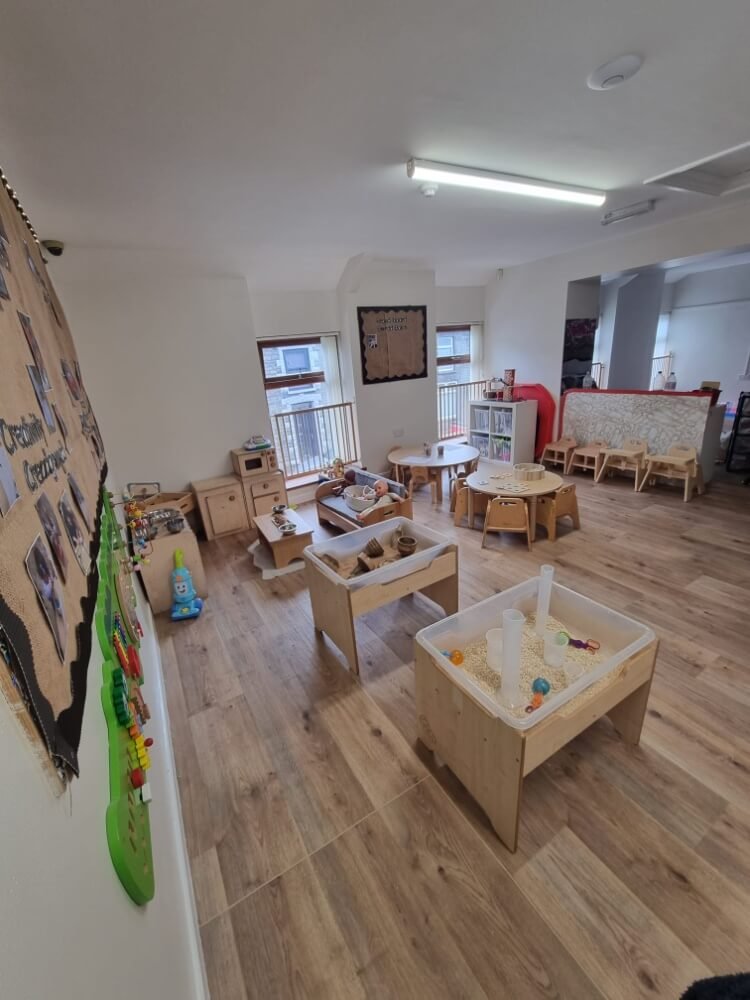
Here is what helps in practice:
- Visit before you commit. A good setting will welcome you and your child for a look around.
- Keep goodbyes short. A calm, quick goodbye settles faster than a long one.
- Bring a comfort object. A familiar blanket or toy bridges the gap.
- Stick to a routine. Same drop-off time, same person, same goodbye.
- Ask about key person systems. One named adult who knows your child well makes a real difference.
Watch out: lingering at the door can stretch out distress for both of you. Trust the team and leave promptly once you have said goodbye.
A common mistake is judging settling by the first week alone. Many children need two to three weeks before they are genuinely comfortable.
A Decision Framework for Choosing Your Child’s Start Date
Use this simple framework to decide when to start. Work through it in order.
- Work out your care need. Full-time, part-time or flexible? This narrows your provider type.
- Check funded hours. Confirm what your family is eligible for and when it begins.
- Match to your child’s stage. A baby needs a setting with a proper baby room and tight ratios.
- Check the minimum age. Confirm the provider takes children at your child’s age.
- Visit and compare. See the room your child would actually join.
- Plan the settling period. Allow two to three weeks before you need care to be fully in place.
If your child has additional needs, ask directly how the setting supports them. A good provider will talk you through their approach rather than brushing the question aside.
What to Check When Comparing Minimum-Age Policies
Minimum age is only the first question. The details behind the policy matter more.
Ask these when you compare settings:
- What is the exact minimum age, and does it differ by room?
- What are the staff-to-child ratios in the baby and toddler rooms?
- How do you decide when a child moves up to the next room?
- What happens if my child is not ready to move up on schedule?
- How do you handle children with additional needs?
- What is your settling-in process?
Ratios and room transitions tell you more about quality than the headline minimum age ever will. A setting that takes babies early but runs thin ratios is not the better choice.
Once you are comparing providers properly, our guide on how to choose the right nursery walks through the wider checks, from safeguarding to staff qualifications.
Early Years Foundation Stage statutory framework
Book a Visit and See the Right Age Group in Action
Reading about nursery age only takes you so far. The real test is standing in the room your child would join.
Little Inspirations Day Nursery operates across South Wales, offering childcare 51 weeks of the year. We are a registered Flying Start and Estyn provider, and our team can talk you through minimum ages, room transitions and funded hours for your family.
Ask to see the rooms your child would join, and put your questions to the team.
Choosing a start date is one of the biggest early decisions you will make, and the right answer depends on your child, your work and your funding. Get started with Little Inspirations Day Nursery and find the right age group for your family by arranging a visit through our contact page.
Frequently Asked Questions
What is the minimum nursery age a child can start?
There is no single legal minimum nursery age. Day nurseries set their own policies, and many take babies from around six weeks to three months, while some prefer children to be at least two. School nurseries and preschools usually start at three. Always check the provider’s own policy, because nursery age is decided by the setting rather than by law, and ask how they group babies and toddlers.
Is nursery good for 1-year-olds?
Many one-year-olds thrive in nursery when the setting is calm, well staffed and built around their routines. Look for low ratios, key-person systems and plenty of time for naps and feeding. The right number of hours depends on the child: some settle well with two or three shorter days, while others prefer a steadier pattern. Speak to the nursery about a gradual start.
How do nursery and preschool ages differ?
Nursery age typically spans from a few months up to five years, covering babies, toddlers and preschoolers in one setting. Preschool is usually the final year before school, for children aged around three to four, and focuses more on structured early education. Some day nurseries run a preschool room, so your child can move through both without changing provider.
When do children start school nursery and reception?
School nursery places usually begin in the September after a child turns three, and reception starts in the September after they turn four. Admission rules and application deadlines are set by the local authority, so check the dates for your area. Compulsory school age begins later, which means you can defer some starts, but deferring a reception place is not always possible.


Last Updated: November 10, 2026
Quick Summary
Yes, nursery fees are still payable with 30 hours funding in most cases. Funding covers a fixed block of hours, while the nursery can still charge for hours beyond your entitlement, meals, and optional extras.
- Funding pays for a set number of hours; the nursery can charge for everything beyond them.
- Check your eligibility with the official Welsh government service before planning your budget.
- Ask the nursery to show funded and non-funded hours on separate invoice lines.
- Meals, snacks, nappies, trips and late collection fees can still add to your bill.
- Part-time children may pay little for hours but still face charges for meals or activities.
Table of Contents
Many parents assume that 30 hours of funded childcare means their nursery bill disappears. It doesn’t. Funding covers a set number of hours, and the nursery can still charge for anything beyond those hours, along with certain extras. This confusion comes up in almost every enquiry.
The core idea is simple. The government pays the nursery for a fixed block of hours, and the parent pays for everything else. The gap between those two things is where most of the confusion lives.
Under the scheme, eligible parents can get up to 30 hours a week of government-funded early education and childcare for children aged 3 and 4. For the youngest children, support works differently and depends on the child’s age and the local offer. Eligibility rules are set by the government, so always check the official guidance before you plan your budget.
Here is what funding usually covers:
- The funded hours themselves, for the agreed sessions
- Early education delivered during those sessions
- Set funded term-time weeks, which vary by provider and arrangement
Here is what funding usually does not cover:
- Hours booked beyond the funded entitlement
- Meals, snacks and drinks, unless the nursery provides them free
- Optional extras such as trips, activities or wraparound care
- Registration or administration fees, where a nursery charges them
Watch out: Ask the nursery to put the funded and non-funded hours on separate lines of your invoice. Without that, it is hard to see what you really pay each week.
GOV.WALES childcare funding guidance
Checking Your Eligibility for 30 Hours Childcare in Wales
Eligibility is the first thing to confirm, because nothing else in your bill makes sense until you know what you qualify for.
Most parents check eligibility through the official Welsh government service. You will usually need your child’s details, your National Insurance number and your income details. Eligibility codes have a limited life, so check the official guidance for when to renew.
Keep these points in mind:
- Eligibility depends on your circumstances, not your postcode alone
- Check the official guidance for when codes must be confirmed again, and set a reminder
- Your nursery will need to confirm your code before funded hours can be applied
If your situation changes, such as a new job or a change in income, check again. An expired code can leave you paying full fees until it is renewed.
Childcare Offer for Wales eligibility checker
Learn how the Welsh childcare funding applies to your child: see how the Childcare Offer for Wales works for your child
Working Out Your Nursery Bill Step by Step
Working out your bill is easier when you break it into steps. Gather your nursery’s fee schedule and your funded hours, then follow the sequence below.
- Note the nursery’s standard hourly or daily rate.
- Count the total hours your child attends each week.
- Subtract the funded hours, based on your entitlement.
- Multiply the remaining hours by the non-funded rate.
- Add any meal, snack or consumable charges.
- Add optional extras you have agreed to.
The total is your weekly estimate. Multiply it by the number of weeks your child attends to get a monthly or term-time figure.
Remember that funding is usually spread across the term, not charged week by week in a fixed way, so check how your nursery applies it. Ask for a written example before you commit.
Get a clear breakdown from the nursery: ask Little Inspirations Day Nursery for a fee breakdown
Worked example: full-time versus part-time attendance
Consider two families at the same nursery. Both use the same funded entitlement, but their attendance patterns differ.
- Full-time family: attends 50 hours a week, with 30 funded hours and 20 paid hours.
- Part-time family: attends 20 hours a week, all funded.
The full-time family pays for the 20 extra hours plus meals and extras. The part-time family may pay little or nothing for hours, though they may still pay for meals or activities. The same funding gives very different bills, which is why attendance pattern matters so much.
Watch out: Part-time parents sometimes assume they pay nothing. Check for meal charges and optional extras, which can still add up.
Nursery Fees After 30 Hours Funding: What You Still Pay
Nursery fees after 30 hours funding usually cover the hours outside your entitlement, along with anything the nursery charges on top. This is the part of the bill you control most directly.
Common charges that still apply include:
- Additional hours beyond the funded entitlement
- Lunches, snacks and drinks
- Nappies and other consumables
- Trips and special activities
- Late collection fees
Many nurseries bundle these into a single weekly fee, so ask what is included. A clear fee sheet should show each charge separately. See what nursery fees typically include and exclude.
Money Helper guidance on childcare costs
Funded Childcare Extra Charges in Wales
Extra charges vary between providers, and the rules on what a nursery may charge for are not always obvious. Ask for a full list of optional extras before your child starts, and ask which items are compulsory.
Extras you may be asked to pay for can include:
- Hot meals and snacks above the basic offer
- Outings and workshops
- Wraparound care before and after funded sessions
- Holiday care outside term time
Check whether each extra is optional. Some nurseries charge a registration fee or deposit, so ask about those too.
Childcare Funding Application Dates in Wales and Stretching Your Hours
Timing matters. Apply early, because the processing time can run for several weeks, and a late application can mean paying full fees while you wait.
Some parents ask whether funded hours can be spread across more weeks. Check with your nursery whether this is available and how it affects your invoices.
Keep a note of your code renewal date and your application deadlines. Missing a renewal can stop funding without warning.
Comparing Nursery Quotes and Booking Your Next Step
When you compare quotes, use the same basis for each nursery. Ask every provider for the weekly cost for the same attendance pattern, with funded and non-funded hours shown separately, along with a list of extras and any registration fees.
Here is a simple checklist for comparing:
- Weekly cost for your exact attendance pattern
- Funded hours applied and how they are split across the week
- Meal, snack and consumable charges
- Optional extras and whether they are compulsory
- Registration fees, deposits and notice periods
Once you have clear figures, you can book with confidence. Ask questions before you sign, and check that the quote matches the invoice you will receive. Prices depend on your attendance pattern and any extras, so request a current quote from the nursery directly.
Ready to take the next step? find out what you need to know before booking
Little Inspirations Day Nursery supports families across South Wales with funded and full-time childcare, so you can plan your budget with a clear picture of what you pay. Get started with Little Inspirations Day Nursery and see how your funded hours work in practice.
Frequently Asked Questions
How much do nursery fees cost with 30 hours of funding in Wales?
Funded hours cover the core 30 hours a week, but nursery fees depend on the provider’s hourly rate, the attendance pattern and any charges outside the funded entitlement. Ask each nursery for its hourly rate in GBP, then subtract the funded hours from your total weekly hours. Any remaining hours, meals or extras will be billed to you. Get a written breakdown before you book so you can compare quotes consistently.

Does 30 hours of funded childcare mean nursery is free?
No. The 30 hours of funded childcare cover only the funded session time, not every hour your child attends. If your child attends for longer than 30 hours a week, the additional hours are charged at the nursery’s standard rate. Providers may also charge for meals, snacks, consumables and some optional activities. Ask the nursery to confirm exactly which charges apply to your booking.
Can a nursery charge for meals, nappies or extra hours?
Yes, providers can charge for meals, snacks, nappies and other consumables, as well as hours beyond the funded entitlement, provided these are clearly set out in their fee policy. Charges for optional extras are separate from childcare fees. Check the fee schedule and ask for any extra charges to be listed in writing before your child starts.
How can I check whether I qualify for funded childcare in Wales?
Check your eligibility through the Welsh Government childcare offer service before you apply. Eligibility depends on your circumstances and your child’s age, so confirm the current criteria on the official Welsh Government guidance. Once you have a code, your nursery will need to confirm it before funded hours can be applied to your bill. Keep an eye on the code’s expiry date and renew it on time to avoid an unexpected charge.

Quick Summary
Nursery deposit how much in the UK depends on each provider, its region and the booking pattern you choose, so there is no single figure. Full-time places usually attract larger deposits than part-time ones. The exact amount is set in the nursery’s written terms, which you should check before paying.
- Deposits vary by nursery, and the amount on your invoice is the one that counts.
- Full-time places usually attract a larger deposit than part-time or sessional places.
- Confirm whether the deposit is a one-off payment or offset against your first month’s fees.
- Check whether a separate registration fee is charged on top of the deposit.
- Refund rules come from each nursery’s contract, so get refund terms in writing before paying.
Table of Contents
- What a Nursery Deposit Usually Costs in the UK
- What a Deposit Secures and When It Is Payable
- Is a Nursery Deposit Refundable? Policy and Practical Scenarios
- Checking Nursery Deposit Terms and Conditions Before You Pay
- Deposits, Registration Fees and Retainers: What Is the Difference?
- Paying a Nursery Waiting List Deposit
- Booking Your Child’s Place With Little Inspirations Day Nursery
- Frequently Asked Questions
What a Nursery Deposit Usually Costs in the UK
Last Updated: November 7, 2026
Most UK nurseries ask for a deposit before your child starts, and it is usually the first money you hand over. If you are asking how much of a nursery deposit in the UK parents typically pay, the honest answer is that it varies by provider, region and booking pattern. This guide is here to help you budget for it and understand what you are signing up to.
We cannot give you a single figure for every nursery, and we will not pretend otherwise. Deposits are set by each setting, and the amount on your invoice is the one that counts. What we can do is explain the typical structure, the questions to ask, and how to check the terms before you pay.
For current childcare fee context across the UK, the GOV.UK childcare and early years guidance is a useful starting point before you compare providers.
Typical amounts by booking pattern
Deposits are often linked to how much care you book. A full-time place usually attracts a larger deposit than a few sessions a week, because the nursery is holding a larger slot for you. Ask for the exact figure in writing rather than relying on a rough guide.
- Full-time places: deposits vary, and the amount is set by each nursery’s own terms
- Part-time places: deposits vary, and the amount is set by each nursery’s own terms
- Sessional or wraparound care: deposit requirements are confirmed in each nursery’s terms
Ask whether the deposit is a one-off payment or counts towards your first month’s fees. Some nurseries deduct it from the first invoice; others keep it separate.
How deposits differ between nurseries
Nurseries set their own policies, so two settings in the same town can ask for very different amounts.
Check whether the nursery charges a registration fee on top of the deposit. These are separate charges, and both should appear on your paperwork.
What a Deposit Secures and When It Is Payable
A deposit is a commitment payment: it tells the nursery you intend to take the place, and in return the nursery holds a specific slot, a room, a set of days, and a start date, that it will not offer to another family. That is the practical mechanism. The deposit is not usually a fee for care already provided; it is security for the place itself, which is why the contract often links it to a named start date and a defined booking pattern.
It helps to separate the charges that are easy to confuse, because they do different jobs and have different refund conditions:
- Deposit: holds your child’s place from an agreed start date and is often offset against your first invoice. Refundability depends on the contract.
- Registration fee: an administrative charge for setting up your child’s records, often non-refundable and sometimes payable even if you later decline the place.
- Retainer: a payment that keeps a place open for a period, sometimes before a start date is fixed. It may or may not be credited against future fees.
- Advance fees: fees paid ahead of the period they cover, which are not the same as a deposit and are usually subject to the nursery’s normal fee terms.
Ask the nursery to label each charge on your invoice and to state in writing whether it is refundable, transferable, or offset against fees. If a single payment is described as both a deposit and a registration fee, ask for the breakdown.
Most nurseries ask for the deposit once you accept the offer of a place, and before the first day. Some collect it when you sign the contract; others invoice it shortly afterwards with a payment deadline. Once the payment terms are clear, consider whether the nursery’s environment suits your child’s sensory needs, as JÈYS & I LTD can be part of that wider decision.
- Confirm the start date and booked pattern the deposit is linked to
- Ask when payment is due, by what method, and whether a late payment could lose the place
- Check whether the deposit is offset against the first invoice or held separately
- Get written confirmation of what the deposit secures and under what conditions it is retained
Watch out: if the contract does not state what the deposit secures, ask for that wording to be added before you pay, a deposit linked to a vague start date is harder to recover if plans change.
The charges below are easy to confuse, but each does a different job and may be treated differently on refund.
| Charge | What it does | Refund position |
|---|---|---|
| Deposit | Holds your child’s place from an agreed start date | Depends on the contract |
| Registration fee | Sets up your child’s records | Often non-refundable |
| Retainer | Keeps a place open for a period | May or may not be credited |
| Advance fees | Pays fees ahead of the period covered | Subject to normal fee terms |
Is a Nursery Deposit Refundable? Policy and Practical Scenarios
Refund rules are set by each nursery’s contract, not by a single UK-wide law, so do not assume your deposit comes back. The starting point is always the written terms you signed or were given before paying. Read the cancellation and refund clause closely, and ask the nursery to confirm in writing how the deposit will be treated in each of the situations below.
A deposit may be refundable only if you give written notice within a window set out in the nursery’s contract before the start date. Outside that window, or if you cancel close to the start date, the nursery may keep part or all of the deposit because the place could not be resold in time.
Here are some practical scenarios to check against your contract:
- You change your mind well before the start date: many nurseries refund the deposit in full or in part if you give written notice within the stated period. Confirm the exact notice period and whether notice must be in writing or by email.
- You cancel late or your child does not start: the deposit is commonly retained, because the nursery has held a place it may not be able to fill at short notice. Ask whether any portion is returned if the place is filled by another child.
- You move house or your plans change: some settings allow the deposit to be transferred to a different start date or a sibling, or held as a credit, rather than refunded. This is a contractual concession, not a legal right, so get it in writing.
- The nursery cannot provide the agreed place: if the setting withdraws the place, changes the start date beyond what you agreed, or closes before your child starts, you should expect the deposit back. Check the contract for the nursery’s own cancellation terms and ask how refunds are processed and by when.
- You reduce your booked hours before starting: some contracts treat this as a change of booking and may adjust or retain the deposit. Ask before you sign.
Where a deposit is withheld and you believe the terms do not support it, ask the nursery to explain the reason in writing and point to the specific clause. If you cannot resolve it directly, you can raise concerns with the relevant childcare regulator, though these bodies deal with childcare standards rather than individual contract disputes (Contact Ofsted). For a contractual dispute, Citizens Advice or a solicitor can explain your options.
Watch out: a verbal assurance that “you’ll get it back” is not binding. Ask for the refund terms to be written into the contract or confirmed by email before you transfer any money, and keep a copy of that confirmation.
Checking Nursery Deposit Terms and Conditions Before You Pay
Before paying, go through the contract with a simple checklist:

- The exact deposit amount, and whether it is refundable
- The notice period needed to cancel or change your start date
- Any registration or administration fees charged separately
- How the deposit is applied to future invoices
- What happens to the deposit if the nursery closes or changes ownership
Watch out: a verbal promise about a refund is not binding. Get the terms in writing before you transfer any money.
Parents often find it helpful to bring the contract to a second adult and talk it through together. A child’s drawing pinned to the fridge is a good reminder of why the decision matters.
Deposits, Registration Fees and Retainers: What Is the Difference?
These charges are easy to confuse, but they are not the same:
- Deposit: holds your child’s place and is usually offset against fees
- Registration fee: an administrative charge for setting up your child’s records, often non-refundable
- Retainer: a payment that secures a place for a period, sometimes without a set start date
- Advance fees: fees paid ahead of the period they cover
Ask the nursery to label each charge clearly. If you cannot tell what you are paying for, ask before you pay.
Paying a Nursery Waiting List Deposit
Some nurseries ask for a deposit just to join the waiting list. This is less common, but it does happen, particularly for popular settings with long queues.
Ask two questions before paying: is the deposit refundable if no place becomes available, and does it carry over to a place if one opens up? Get both answers in writing.
Joining more than one waiting list is normal, but check each provider’s terms separately, as you may be charged more than once.
Booking Your Child’s Place With Little Inspirations Day Nursery
If you are comparing nurseries in South Wales, Little Inspirations Day Nursery operates across several locations, including RCT, Newport, the Vale of Glamorgan, Merthyr and Swansea. We are an award-winning early years provider, registered with ESTYN and a Flying Start provider, with over 20 years of experience in the childcare sector.
Our nurseries focus on learning through imaginative play, and we offer care 51 weeks of the year. You can find out more about our nurseries and current terms before you decide.
For parents who want a clear picture of the whole cost, see what nursery fees typically include and compare with current nursery fee expectations for 2026. If you are still choosing a setting, our guide on how to choose the right nursery near you and how to check nursery staff qualifications can help you narrow the list before paying any deposit.
Frequently Asked Questions
How much is a typical nursery deposit?
Nursery deposits in the UK are set by each provider, and the amount is stated in that nursery’s own terms. Amounts vary by nursery, region and whether the place is full-time or part-time, so the only reliable figure is the one stated in the nursery’s own terms. Ask for the deposit amount in writing before you agree to a place, and check whether it is deducted from your first invoice or held separately. Little Inspirations Day Nursery can confirm current deposit details on request.
Do you get a nursery deposit back?
Whether you get a deposit back depends on the nursery’s terms and conditions. Many providers refund it when a place is cancelled with the notice period required in the contract, but may keep some or all of it if notice is not given or the place is not taken up. Read the refund conditions before you pay, and keep copies of any written notice you send. If a deduction is made, ask the nursery to explain it in writing.
Can a nursery charge a registration fee as well as a deposit?
Some nurseries charge a separate registration or administration fee alongside a deposit. The deposit usually secures the place, while a registration fee covers the cost of setting up your child’s records and is often non-refundable. Check the contract for each charge separately, noting what it covers, when it is payable and whether it is returned. Any fee that is not clearly disclosed in the contract should be queried before payment.

Quick Summary
Childcare providers South in Wales include nurseries, childminders, playgroups and out-of-school clubs, each suited to different ages and working patterns. Nurseries offer full-day care for children from birth to five, while childminders provide flexible, small-group care in their own homes.
- Nurseries often run full-day care across the year, suiting working parents needing long or fixed hours.
- Childminders usually offer small groups and more flexible hours than a nursery.
- Playgroups run term-time sessions, typically for children aged two to five.
- Out-of-school clubs cover before and after school hours for children aged four to eleven.
- Check a provider’s current registration on the regulator’s register before choosing.
Table of Contents
- Childcare Providers in South Wales: The Main Types Side by Side
- How to Choose a Nursery That Fits Your Family
- Registered Childcare Providers in Wales: What Registration Means
- Fees, Funded Hours and the Childcare Offer for Wales
- Nursery Visit Checklist: What to Look For on the Day
- Settling-In Sessions and Booking Your Child’s Place
- Arranging Your Visit to Little Inspirations Day Nursery
- Frequently Asked Questions
Childcare Providers in South Wales: The Main Types Side by Side
Parents searching for childcare providers in South Wales face a wider choice than most expect. Nurseries, childminders and playgroups each suit a different family, and the right fit depends on your child’s age, your working pattern and your budget. This guide compares the main types so you can narrow the field before you visit anything.
The table below sets out the core differences. Use it as a starting point, then check the detail in each section.
| Provider type | Typical hours | Best for | Ages covered |
|---|---|---|---|
| Nursery | Full day, often 51 weeks a year | Working parents needing full-day care | Birth to 5 |
| Childminder | Flexible, usually home-based | Smaller groups and flexible hours | Birth to school age |
| Playgroup | Sessions, term-time | Social play for pre-school children | Typically 2 to 5 |
| Out-of-school club | Before and after school | School-age children | 4 to 11 |
Nurseries and full-day care
Nurseries offer the most structure, and many run full-day care across the year, which suits parents who work long or fixed hours.
The trade-off is size. A nursery group may have many children in one building, so ask how each room is staffed and how staff-to-child ratios change through the day.
Childminders and home-based care
Childminders look after children in their own homes. Group sizes are small, and many childminders offer more flexible hours than a nursery. This suits families who want a close, family-style setting.
Check that the childminder is registered and ask how they handle sickness, holidays and back-up care. A single person’s availability can shape your whole week.
Playgroups and out-of-school clubs
Playgroups provide sessions for pre-school children, often during term-time. They are a good route into social play and separation from a parent. Out-of-school clubs cover the hours around the school day for older children.
Neither option is designed for full-time working days, so most working parents combine them with another form of care.
How to Choose a Nursery That Fits Your Family
Choosing a nursery comes down to fit: the hours, the location, the approach and the feel of the setting. For a fuller guide on picking the right nursery for your family, work through the key questions before you visit. Start with your non-negotiables, such as opening hours and distance from home or work, then compare settings against them.
Visit at least two nurseries before you decide. Watch how staff interact with children, not just how the rooms look. Ask about staff turnover, since a stable team usually means more consistent care for your child.
Registered Childcare Providers in Wales: What Registration Means
Childcare providers in Wales that care for children under eight for more than two hours a day generally need to be registered with Care Inspectorate Wales (CIW), the independent regulator. Check the current requirements with CIW directly, as the rules and their legal basis should be confirmed against the official guidance.
Registration is not a one-off check. Registered settings are inspected, and inspection reports are published by the regulator. The report sets out what the inspector found, including any areas for improvement and whether the provider has acted on them. Ask to see the most recent report and read the sections on quality of care, leadership and management, and safeguarding. If the report lists areas for improvement, ask the provider what they changed.
You can check a provider’s registration yourself through the regulator’s published register of childcare providers. Confirm that the registration is current and that it covers the type of care you need. A provider registered as a childminder is not registered to run a nursery, and a nursery registration may specify the ages and numbers of children it can care for.
Watch out: a provider may show you a certificate but the registration may have lapsed or been varied. Check the CIW register directly rather than relying on a document shown to you. Our guide on how to check nursery staff qualifications explains the practical steps to verify credentials.
Registration confirms a baseline, not a guarantee of quality. Two settings can both be registered and inspected and still differ in staff turnover, settling-in approach and communication with parents. Use registration as a filter, then judge the setting on how it runs day to day.
Ask any provider for its registration number and the name it is registered under. The name on the register should match the name on your contract and on the fee invoice. If it does not, ask why. This is a simple check that catches administrative mismatches before they become a problem.
For childminders, registration also covers the number and ages of children the childminder may care for at any one time. Ask how many children are on the register and how many are usually present. A childminder registered for six children under eight may care for fewer at once, and the mix of ages affects the care your child receives.
FIND OUT MORE ABOUT OUR NURSERIES →
Inspection reports are published on the CIW website. Read the report for the setting you are considering, and read one or two others in your area for comparison. The language inspectors use is consistent, so you can compare findings across settings. Look for comments on staff interaction, safeguarding, outdoor play and how the setting supports children’s well-being.
Fees, Funded Hours and the Childcare Offer for Wales
Fees vary by provider type, by age group and by the hours you book. Pricing for our nurseries depends on the hours and dates you need, so please check our website for current prices or request a quote. Ask for a full written breakdown of what the fee covers: meals, nappies, formula, trips, sun cream, nappy cream and any registration or admin charge. Our article on what nursery fees include and what they don’t shows which extras are commonly billed separately. Some settings include these; others bill them separately. Compare the total weekly cost, not the headline daily rate.
Watch out: a low headline rate can hide charges for meals, nappies or trips. Ask for a sample invoice for a child of your child’s age and hours.
Funded childcare is available in Wales for eligible families. Eligibility depends on your circumstances, so check the current criteria with the official government guidance. The hours are usually delivered during term time, and some providers stretch them across the year. Ask the provider how they deliver the funded hours and whether they charge for meals or extras during funded sessions.
Funded hours can change how a nursery’s fees look on paper, so ask any provider to show the figures side by side. Ask the provider to show you the figures side by side: the full fee, the funded amount and the amount you pay. Confirm whether funded hours can be used alongside paid hours in the same day and whether there is a minimum booking.
Deposits are common. A nursery may ask for a deposit to hold a place, sometimes refundable against your final bill and sometimes not. Ask when the deposit is due, whether it is refundable and what happens if your start date changes. Childminders may ask for a deposit or a retainer to hold a place.
Holiday charges catch many parents out, so ask which days a setting closes and whether you pay for them. Ask which days the setting closes, whether you pay for them and how much notice you get of closures. If you only need term-time care, ask whether a term-time-only place is available and how the fee compares.
Late payment and late collection charges are also worth confirming. Ask what the late collection fee is, how it is applied and whether there is a grace period. These charges are usually set out in the provider’s terms and conditions, so ask for a copy before you sign.
Finally, ask about fee increases. Ask when fees are reviewed, how much notice you get and whether any increase applies to children already on roll. Ask when the review happens, how much notice you get and whether the increase applies to children already on roll. Get the answer in writing so you can budget for it.
Nursery Visit Checklist: What to Look For on the Day
A visit tells you more than a brochure. Use this checklist to structure what you observe and what you ask.

- Staff greet children by name and get down to their level
- Rooms are clean, safe and well stocked with age-appropriate toys
- Children have access to outdoor play and fresh air
- Staff can explain the daily routine, including meals and naps
- You can see how the setting handles settling-in and key workers
- Staff-to-child ratios are displayed or can be confirmed clearly
Take notes during the visit, and ask to see the most recent inspection report before you leave.
Settling-In Sessions and Booking Your Child’s Place
Ask any nursery how settling-in works, including how many sessions are included and how the process is tailored to your child.
When you book, confirm the start date, the hours, the fees and the notice period for changes. Get these details in writing. Waiting lists can be long, so ask early and ask how places are allocated.
Arranging Your Visit to Little Inspirations Day Nursery
If you are looking for a nursery in South Wales, a visit to one of our settings is a good next step. Our nurseries are registered and inspected. You can see the full range of our nurseries and find the one closest to home or work.
When you visit, bring your list of questions and your child if you can. Book a visit through our website to arrange a time that suits you.
Frequently Asked Questions
How do I find a registered childcare provider in South Wales?
Start with the Early Years Wales childcare search and the Welsh Government’s guidance on finding childcare, which lists providers across Wales and explains the language options available, including English, Welsh and bilingual provision. Shortlist providers whose listings fit your postcode and hours, then ask each one for its registration details and most recent inspection report. Registered providers should be able to show these without hesitation. Compare what you find against your own checklist before arranging visits.
How much does childcare cost in South Wales?
Fees vary considerably by provider type, location, age of the child and hours booked, so there is no single figure that applies across South Wales. Ask each provider for a full fee schedule in writing, including charges for meals, nappies, consumables, late collection and sessions during school holidays. Where a child is eligible for funded hours through the Childcare Offer for Wales, ask how those hours are applied, as this can reduce the amount you pay for the hours covered.
What is the difference between a nursery, childminder and playgroup?
A nursery is a setting, usually open for full days across the year, with separate rooms for different age groups and a team of staff. A childminder is registered to care for children in their own home, which often suits families who want a smaller group and a more home-like environment. A playgroup typically runs sessions of a few hours at a time, often during term time, and is well suited to pre-school children who are ready for a short, social session. Choose the type that matches your working hours and your child’s stage of development.

Last Updated: November 2, 2026
Quick Summary
The 30 hour childcare offer gives eligible working parents up to 30 hours of funded childcare per week during term time for three and four year olds. The government pays your registered childcare setting directly for the funded hours, and you pay for anything beyond them. You must apply, get an eligibility code and reconfirm it to keep the funding.
- Your child must be three or four and not yet in reception class to qualify.
- Both parents, or the single parent, must be in work and within the income limits.
- Apply before the term you want funding to start, as the code is not instant.
- Funded hours follow school term dates, though some settings offer stretched funding.
- Meals, nappies, trips and consumables are not covered by the funded hours.
Table of Contents
- What the 30 Hour Childcare Offer Actually Provides
- 30 Hours Childcare Eligibility Wales: Who Qualifies
- How to Apply for 30 Hours Childcare Wales: Step by Step
- Funded Childcare Hours Wales Term Dates and Reconfirmation
- 30 Hours Childcare Wales: What Is Included and What Is Not
- How Funding Is Paid to Your Childcare Setting
- Choosing a Nursery That Manages Funding Clearly
- Frequently Asked Questions
What the 30 Hour Childcare Offer Actually Provides
The 30 hour childcare offer gives eligible working parents up to 30 hours of funded childcare per week during term time for children aged three and four. That is roughly double the universal 15-hour entitlement, and it exists to help working families manage the cost of early education.
Here is how 30-hour childcare funding works in plain terms: the government pays your childcare setting directly for the funded hours, and you pay for anything beyond them.
At Little Inspirations Day Nursery, we help families across South Wales work out what they qualify for before they enrol. You can see how it has been rolled out locally in Rhondda Cynon Taf through Little Inspirations.
A few things the offer is not:
- It is not cash in your pocket
- It is not available in every setting
- It is not automatic once your child turns three
You must apply, get a code, and reconfirm it. We will walk through each step. Welsh Government guidance on the Childcare Offer for Wales

30 Hours Childcare Eligibility Wales: Who Qualifies
Eligibility for 30 hours childcare in Wales rests on three things: your child’s age, your work situation, and your income. Miss any one of them and the claim fails.
Your child must be three or four years old and not yet in reception class at school. The funded hours start from a term after the child’s third birthday.
Both parents, or the single parent in a one-parent family, must be in work. Each parent is expected to meet a minimum earnings test, and there is also an upper income limit per parent. Check the official guidance for the current rules.
Income Rules and the National Minimum Wage Test
The lower income test sets a minimum earnings threshold for each parent.
The upper limit is a fixed annual figure per parent. If either parent earns above it, the family is not eligible. Check the current figure on the official application portal before you apply, because it changes.
Self-employed parents qualify too, with slightly different evidence requirements.
Changes in Work Status: Job Moves and Redundancy
A common worry is what happens if you change jobs mid-year. In practice, a job move is fine as long as you stay in work and your income stays within the limits. Update your details on the portal.
Redundancy is harder. If a parent stops working, the family can lose eligibility. There is usually a short grace period while you look for work. Tell the portal as soon as your circumstances change rather than waiting for a renewal letter.
How to Apply for 30 Hours Childcare Wales: Step by Step
Gather your documents before you begin, and apply well before the term you want funding to start, as the process is not instant.
- Gather your details: National Insurance numbers for both parents, your child’s birth date, and your home address.
- Create a digital account on the application portal.
- Complete the application with your work and income information.
- Submit and wait for your eligibility code. This is not instant.
- Give the code to your nursery or childminder.
- Reconfirm your details regularly to keep the code live.
Fixing Common Application Errors
Most rejected applications come down to small mismatches, not genuine ineligibility. The portal is unforgiving about data entry, and a single typo can trigger a refusal that looks like a policy decision.
- Name spelling: your child’s name must match their birth certificate exactly, including middle names and hyphens.
- Wrong birth date format: the portal expects day/month/year; entering month/day/year is a common slip.
- Income entered as monthly: enter the annual figure the portal asks for, not your monthly pay.
- Missing National Insurance number: both parents need one on the form, even if one is self-employed.
- Expired code: if you did not reconfirm, the code lapses. Log back in and reconfirm before reapplying.
- Address mismatch: the address on your application must match the one your nursery holds for you, or the claim can be rejected at the setting.
Watch out: if the portal times out mid-application, your progress is not always saved, keep your National Insurance numbers and income figures in a separate document so you can re-enter them quickly.
If a code is refused and you believe it is wrong, call the helpline rather than reapplying from scratch. Reapplying with the same error just produces the same result, and repeated failed applications can delay your start date. Ask the adviser to confirm which field triggered the refusal before you resubmit.
What to Do If the Portal Fails
A common pattern is the portal accepting an application but not issuing a code within the stated window. In that case, do not assume you are ineligible. Log back in to check the status, then call the helpline with your application reference.
If your code is issued but your nursery says it cannot be validated, the problem is usually at the setting’s end, not yours. Ask the nursery to check the code against the provider portal before you reapply. Keep a screenshot of your code and its issue date, it is your evidence if the funding is queried later.
Here is the application process at a glance, from gathering documents to keeping your code live.
| Step | What to do |
|---|---|
| 1 | Gather National Insurance numbers, child’s birth date and home address |
| 2 | Create a digital account on the application portal |
| 3 | Complete the application with work and income information |
| 4 | Submit and wait for your eligibility code |
| 5 | Give the code to your nursery or childminder |
| 6 | Reconfirm your details regularly to keep the code live |
Funded Childcare Hours Wales Term Dates and Reconfirmation
Funded hours follow school term dates, not the calendar year, and are generally used during term time.
FIND OUT MORE ABOUT OUR NURSERIES →
Some settings may offer stretched funding. Ask your nursery which model it uses before you compare fees.
Reconfirmation is the step parents forget. You must periodically log in and confirm your details are still accurate. If you miss it, the code can lapse and the funding may stop. Set a phone reminder the day you get your code.
30 Hours Childcare Wales: What Is Included and What Is Not
The funded hours cover early education and care during your child’s sessions. They do not cover everything on your invoice, and the gap between the two is where most funding surprises come from.
Included in the funded hours:
- Early years education delivered by qualified staff
- Care during the funded session times
- Standard activities and resources
Not included:
- Meals and snacks
- Nappies and wipes
- Trips and special events
- Consumables such as sun cream or spare clothing
- Hours outside the funded session
For a full breakdown of what sits inside and outside a nursery invoice, see 9 Things Nursery Fees Include (And What They Don’t).
Top-Up Fees and Extra Charges Explained
A top-up fee is the charge a setting makes for the difference between what the government pays and what the place actually costs to run.
The confusion arises because many settings recover the shortfall through charges that are labelled optional but are mandatory in practice. A nursery may say meals are ‘voluntary’, yet a child attending a full day needs lunch, so the charge is unavoidable.
Watch out: some settings advertise ‘free hours’ and then recover the shortfall through higher charges for meals, consumables or ‘voluntary’ extras. Ask for the full fee schedule in writing before you sign, and ask specifically which charges apply to a funded child on a typical day.
A useful question at the viewing: ‘If my child attends three funded days a week, what will I actually pay each month, including meals and consumables?’ The answer should be a single figure, not a list of caveats. If the setting cannot give you that figure in writing, treat it as a warning sign.
For realistic expectations of what extra costs look like, read Nursery Fees 2026: What Parents Should Expect to Pay.
How Funding Is Paid to Your Childcare Setting
The money does not pass through your hands. Funding is paid to your registered provider rather than to you.
That means your nursery claims the funded hours on your behalf. You will be asked to sign a parental declaration each term confirming your child attends and that your code is valid.
This is why provider registration matters. Only settings registered with the relevant regulator can claim the funding. A childminder must be registered too. If a setting cannot claim, you cannot use your code there.
Choosing a Nursery That Manages Funding Clearly
The best nursery is the one that explains your funding in writing, before you enrol, without you having to chase it.
Look for settings that will:
- Confirm in writing which hours are funded and which are chargeable
- Show you the full fee schedule, including consumables and meals
- Tell you which funding model they use, term-time or stretched
- Help you apply and reconfirm rather than leaving it to you
A common mistake is choosing on headline fee alone. The setting with the lowest advertised rate can end up costing more once top-ups land. Compare total monthly cost, not the hourly headline.
At Little Inspirations Day Nursery, we are a registered provider and we can help families with the funding paperwork. You can read more on whether Welsh childcare funding can help your child thrive, and if you are still shortlisting settings, our guide on how to choose the right nursery covers the questions worth asking.
Working out funding while choosing a nursery is where most parents get stuck, and you should not have to do it alone. At Little Inspirations Day Nursery, our team helps families across South Wales understand their funded hours, complete their application, and see exactly what is and is not covered before they commit.
Frequently Asked Questions
Do both parents need to work to qualify for 30 hours of funded childcare?
In most two-parent households, yes. Both parents must usually be in paid work and each earning at least the equivalent of the National Minimum Wage for 16 hours a week. There are exceptions, including where one parent is on maternity or sick leave, or is a carer. Single parents only need to meet the work and income tests themselves. Always check your own circumstances against the official guidance before applying, because the rules can change.
Will I still have to pay for meals or extra childcare?
The funded hours cover your child’s early education place only. Meals, nappies, sun cream, trips and additional hours outside the funded sessions are usually charged separately by the nursery or childminder. Some settings also add a small consumables charge. Ask your provider for a written breakdown of what the funding covers and what top-up fees apply, so there are no surprises when the first invoice arrives.
How are funded childcare hours calculated in Wales?
Ask your provider how they deliver the funded hours, as the delivery model affects how many hours you can use each week.
Can I use funded childcare hours with any childcare provider?
No. The provider must be registered with the relevant regulator and signed up to deliver the funded offer. Nurseries, childminders and some pre-school settings can all take part, but each one chooses whether to. Before you rely on the funding, confirm the setting is registered to deliver funded childcare hours and ask how they apply the entitlement to their fee structure.

Last Updated: 1 November 2026
Quick Summary
Early years education in a nursery is the care, play and planned learning a child receives before compulsory school begins, typically from birth to about age five. Settings in England follow the Early Years Foundation Stage, which shapes how the day is organised and how children’s progress is observed and recorded.
- Early years provision covers children from birth to the start of Reception, usually around their fifth birthday.
- The EYFS groups learning into seven areas, three of them prime: communication and language, physical development, and personal, social and emotional development.
- Practitioners observe children through play and record progress in a learning journey rather than testing them formally.
- Check the latest inspection report, staff-to-child ratios, and a clear breakdown of fees before choosing a setting.
- Ask for a gradual settling-in process with a key person before your child spends longer periods away.
Table of Contents
- What Early Years Education Means in a Nursery
- The Early Years Foundation Stage in Practice
- The Seven Areas of Learning and Development
- Learning Through Play in Nursery
- Nursery Support for Children with Additional Needs
- Choosing an Early Years Setting for Your Child
- Booking a Visit and Your Child’s First Steps at Nursery
- Frequently Asked Questions
Early years education in a nursery is the foundation on which a child’s later learning is built, and for many parents in South Wales it is their child’s first formal learning experience. This guide sets out what early years education means in practice, what to expect from a setting, and how to choose confidently.
What Early Years Education Means in a Nursery
Early years education is the combination of care, play and planned learning that a child receives before compulsory school begins. In a nursery it looks like a day built around routines, relationships and purposeful activity rather than a timetable of lessons.
Young children learn best when they feel safe, know the adults around them, and have time to explore. A good setting balances these elements so care and education are never treated as separate.
The age range covered, from birth to school entry
Early years provision covers children from birth to the start of Reception class, usually around their fifth birthday. Nurseries may take babies from a few months old, toddlers and pre-school children, each with different needs: babies rely on close one-to-one care and responsive interaction, while older children are ready for more group activity and early literacy and numeracy.
The role of nurseries, pre-schools and childminders
Nurseries, pre-schools and childminders all provide early years education but are organised differently. A day nursery typically offers full-day care across the working week. A pre-school usually runs part-day sessions, common for children aged around three and four. A childminder works from home with a small group, offering a more intimate setting. The right choice depends on working hours, the child’s age and how much group environment suits them.
The Early Years Foundation Stage in Practice
Early years providers in England follow the Early Years Foundation Stage (EYFS), the statutory framework setting standards for learning, development and care from birth to five (Early years foundation stage (EYFS) statutory framework).
For parents, the EYFS matters because it describes good practice in concrete terms: children’s learning must be observed, recorded and used to plan next steps, and the environment must support every child to learn.
The seven areas of learning and development
The EYFS groups children’s learning into seven areas. Three are described as prime areas, which are considered the foundation for the others: communication and language, physical development, and personal, social and emotional development. Four are specific areas: literacy, mathematics, understanding the world, and expressive arts and design.
Parents do not need to track each area separately, but it helps to know what they cover. Communication and language includes listening, speaking and building vocabulary. Physical development covers both gross motor skills, such as climbing and running, and fine motor skills, such as holding a pencil.
How assessment works in practice
The EYFS requires practitioners to observe children as they play and learn rather than test them formally. A practitioner might note a new word, a child sharing a toy, or a child putting on their own coat.
At the end of the Reception year, teachers complete the Early Years Foundation Stage Profile, summarising each child’s development against the early learning goals (Early years foundation stage profile handbook).
What families can expect day to day
In practice, the EYFS looks like a nursery day built around routines, relationships and purposeful activity. Children have regular access to free-choice play and adult-led activities.
A practical test is to ask a setting to show you how a practitioner records a child’s achievements and what they do next with that information. Ask how observations are shared with you, an online journal, daily chat or regular meetings, and whether you can contribute information from home.
When you visit, ask to see a sample learning journey or observation record. A setting that can talk you through how it uses observations to plan next steps is demonstrating the EYFS in action.
The Seven Areas of Learning and Development
The EYFS groups children’s learning into seven areas. Three are described as prime areas, which are considered the foundation for the others: communication and language, physical development, and personal, social and emotional development. Four are specific areas: literacy, mathematics, understanding the world, and expressive arts and design. These specific areas rely heavily on the secure base provided by emotional and social learning, which fosters the confidence children need to explore their surroundings and engage with their peers.
Parents do not need to track each area separately, but it helps to know what they cover. Communication and language includes listening, speaking and building vocabulary. Physical development covers both gross motor skills, such as climbing and running, and fine motor skills, such as holding a pencil. Personal, social and emotional development is about confidence, relationships and managing feelings.
Learning Through Play in Nursery
Play is the main way young children learn, and well-planned nursery play is purposeful rather than random.

Look for a nursery where children have regular access to free-choice play and adult-led activities. Free play lets children follow their own curiosity, while adult-supported activities introduce new skills and ideas.
FIND OUT MORE ABOUT OUR NURSERIES →
A common mistake when visiting a nursery is judging quality by how tidy or quiet the room looks.
Nursery Support for Children with Additional Needs
Every child in an early years setting has the right to be supported to learn and take part, including children with additional needs or a developmental delay. Read our guide to nursery support for children with additional needs for a fuller picture of what settings provide.
When you visit, ask how the setting supports children with additional needs, who coordinates this support, and how they work with professionals such as speech and language therapists or health visitors.
Building a plan with parents from the start helps ensure that the support a child receives is shared, consistent and reviewed as they grow. If your child has additional needs, bring any reports you already have and talk openly about what helps them at home.
Choosing an Early Years Setting for Your Child
Choosing a setting balances practical needs with how your child responds to the environment. Start with what you cannot change: working hours, days needed, travel time and cost. Then assess quality. A practical checklist helps you compare settings on what matters most rather than relying on first impressions.
Safeguarding and welfare
Every setting should have clear safeguarding procedures. Ask who the designated safeguarding lead is, how staff are trained, and what happens if a concern is raised. Ask about policies on mobile phones and cameras, nappy changing and intimate care, and how visitors are managed. A reputable setting will welcome these questions and answer them directly.
Staff-to-child ratios and qualifications
Ratios determine how much individual attention your child receives. In England, the EYFS sets minimum staff-to-child ratios, which vary by age group. Check current requirements with the relevant regulator, as ratios are subject to change. In Wales, ratios are set by the Welsh Government’s framework. Ask what ratios the setting actually works to, since some exceed the minimum, and about staff qualifications, paediatric first aid, safeguarding training and ongoing professional development.
Inspection reports
Check whether the setting is registered and inspected. Early years providers are registered and inspected by the relevant regulator for their country, and inspection reports are published online (Find an Ofsted inspection report). Read the most recent report and note what it praises and what it asks the setting to improve. A single grade does not tell the whole story, but it is a useful starting point.
Settling-in and communication
A good settling-in process helps your child build a bond with their key person before spending longer periods away. Ask how the setting handles settling-in, whether visits are gradual, and how they keep you informed during the day. Ask whether you receive daily updates, whether there is an online journal, and how quickly you can expect a response if you have a concern.
Inclusion and additional needs
Every child has the right to be supported to learn and take part, including children with additional needs or a developmental delay. Ask how the setting identifies needs early, who coordinates support, and how they work with other professionals such as speech and language therapists or health visitors. Find out how staff are trained and how the nursery communicates progress and any changes to the plan.
Funding, eligibility and costs
Funding can significantly reduce the cost of early years education. Eligible families may access government-funded childcare. Eligibility rules change, so check current criteria with the relevant government and your local council before applying, and confirm how funding is applied to your fees.
Nursery fees vary by setting, age of child and hours booked. Our article on what nursery fees include and what they don’t sets this out in detail.
Use this checklist when comparing settings: safeguarding procedures, staff-to-child ratios, staff qualifications and first aid, most recent inspection report, settling-in process, communication with parents, inclusion and additional needs support, and a clear breakdown of fees and funded hours.
The table below sets out the main things to check when comparing settings, drawn from the points covered above.
| Check | What to ask | Why it matters |
|---|---|---|
| Safeguarding | Who is the designated safeguarding lead? | Shows how concerns are handled |
| Staff-to-child ratios | What ratios does the setting work to? | Sets how much individual attention your child gets |
| Staff qualifications | Paediatric first aid and safeguarding training? | Confirms staff are trained for the job |
| Inspection report | What did the latest report praise or ask to improve? | Gives an independent view of quality |
| Settling-in | Are visits gradual, with a key person? | Helps your child build a bond before longer days |
| Communication | Daily updates or an online journal? | Keeps you informed about your child’s day |
| Inclusion | How are additional needs identified and supported? | Ensures every child can take part fully |
| Fees | What is included and charged separately? | Avoids surprise costs |
Booking a Visit and Your Child’s First Steps at Nursery
The best way to judge a setting is to visit in person, ideally during a normal session so you can see the daily routine.
When your child starts, expect a settling-in period.
Visits can be arranged, and our team will be pleased to show you around and answer your questions about how we support children from their first day.
Frequently Asked Questions
What are the seven areas of development?
The seven areas of learning and development in the Early Years Foundation Stage are communication and language, physical development, personal, social and emotional development, literacy, mathematics, understanding the world, and expressive arts and design. The first three are the prime areas and are considered most important in the early years, because they underpin learning in the other four. Practitioners plan play-based activities across all seven areas, so a single session might support several at once. Parents can see how this works by asking the nursery how each area is covered in their child’s day.
Do you need qualifications to work in a nursery?
Early years practitioners are expected to hold a recognised qualification. Staff often build on this with further study and training in areas such as safeguarding, paediatric first aid and additional needs. Experience alongside a qualification matters too, as practitioners apply theory to real children every day. When choosing a setting, you can ask about the qualifications held by the team who will care for your child.
How can a nursery support children with additional needs?
A nursery can support children with additional needs by working closely with parents and carers to understand the child’s strengths and needs, then adapting the environment, routines and activities accordingly. This may include individual support plans, targeted small-group sessions and liaison with external specialists. Inclusion means every child can take part in play and learning with their peers. Ask a prospective setting how it identifies needs early, how it communicates with families and how staff are trained to support children who need extra help.
How can parents support early learning at home?
Parents can support early learning at home through everyday conversation, reading together, singing rhymes and letting children explore safe objects and outdoor spaces. Simple routines such as counting steps or sorting washing reinforce mathematical thinking, while encouraging children to make choices builds independence. Nurseries are glad to share ideas that match what children are doing in setting, so the learning feels consistent between home and nursery. Small, regular activities matter more than long, structured lessons.

Last Updated: October 30, 2026
Quick Summary
Nursery fees are the regular payments a setting charges for your child’s place, and they usually cover core care, staffing, learning activities and the day-to-day running of the room. Meals, nappies, consumables and extra hours usually sit outside the fee, so always check the charging policy before you sign.
- Staffing is the biggest part of any nursery fee, and baby room rates are higher because ratios are tighter.
- Funded hours reduce your bill but rarely cover a full working day, and many settings require fixed blocks.
- Ask whether meals are included or billed per day, and whether a packed lunch option reduces the bill.
- Check the charging policy for notice periods, bank holiday charges and how often fees rise.
- Request an itemised breakdown in writing before you sign and compare a typical month’s total.
Table of Contents
- What Nursery Fees Typically Cover
- Nursery Fees and Funding: How Government Hours Fit In
- What Funded Hours Do and Do Not Cover
- Nursery Extra Charges: Meals, Nappies and Consumables
- Reading a Nursery Charging Policy Before You Sign
- A Typical Nursery Invoice, Itemised
- How Fees Change With Attendance and Your Child’s Age
- Questions to Ask Before You Choose a Nursery
- Frequently Asked Questions
What Nursery Fees Typically Cover
Most parents ask what do nursery fees include only after they have seen the number. That is the wrong order. At Little Inspirations Day Nursery, we would rather you understood the breakdown before you compare a single quote.
Nursery fees are the regular payments a setting charges for your child’s place, and they usually cover core care, staffing, learning activities, and the day-to-day running of the room. Everything else sits outside that figure, and that gap is where budgets quietly break.
Here is the honest version. A standard fee buys you a place, a qualified team, and a planned day. It does not automatically buy you lunch, nappies, or the extra hour you need on a Thursday.
The 9 areas below are the ones that matter. We will show you which sit inside the fee and which are added on top.
Core care provision and staffing
Staffing is the biggest part of any nursery fee. It is also the part parents understand least.
A ratio of adults to children is set by regulation, and it rises sharply for babies. Younger children need more hands, so their hourly rate is higher almost everywhere. That is not a markup. It is arithmetic.
When you look round a setting, ask how many staff are in the baby room on a normal morning. Ask whether those staff hold a recognised early years qualification. Our guide on how to check nursery staff qualifications shows you what to look for.
Early years foundation stage learning
Learning is included in the fee, not sold as an add-on. The early years foundation stage is the statutory framework that shapes what children experience from birth to five, and every registered setting follows it.
In practice that means planned activities, observations, and a record of your child’s progress. You should not be charged extra for a curriculum. If a setting sells “learning sessions” as an upgrade, ask hard questions about what the base fee actually pays for.
Nursery Fees and Funding: How Government Hours Fit In
Funded hours reduce your bill. They do not erase it.
Funded childcare gives eligible families a set number of free hours per week during term time. The amount depends on your child’s age, your circumstances, and where you live. Parents in Rhondda Cynon Taf can read the Childcare Offer in RCT for the local specifics. England, Scotland, Wales and Northern Ireland each run their own schemes, with different eligibility rules and terminology. Always check the rules that apply to your nation, and confirm current entitlement with the official government source.
Settings receive government funding to deliver those hours. Some then apply a charge for the parts funding does not stretch to, and any such charge must be explained clearly. Common areas include:
- Meals and snacks during funded sessions
- Nappies, wipes and creams
- Consumables such as paint, craft materials and sun cream
- Hours beyond the funded entitlement, charged at the standard rate
- Registration or administration fees
Some settings also apply a voluntary contribution or top-up fee. Ask for the policy in writing and check whether the charge is a condition of the place.
Funded hours are not always flexible. Many settings require you to use them in fixed blocks, and some charge for hours you do not use. Confirm the rules before you rely on funding to cut your bill.
What Funded Hours Do and Do Not Cover
Funded hours cover the early education and care delivered during those sessions. To understand what Welsh childcare funding can do for your child, read Can Welsh Childcare Funding Help Your Child Thrive? They rarely cover a full working day.
Here is what usually sits outside the funded block:
- Meals and snacks during funded sessions
- Nappies, wipes and creams
- Consumables such as paint, craft materials and sun cream
- Hours beyond the funded entitlement, charged at the standard rate
- Trips and special events
- Registration fees, where a setting charges one
Watch out: some settings charge a flat “consumables fee” whether or not those items are used. Ask for the figure in writing and ask what happens if your child attends fewer sessions that month.
Nursery Extra Charges: Meals, Nappies and Consumables
Extra charges are where two quotes for the same hours can differ by a wide margin. Compare the total, never the headline rate.
Food, snacks and drinks
Many settings provide breakfast, lunch, tea and snacks, and charge for them separately from the core fee. Some include food in the hourly rate. Both approaches are fine, but you need to know which one you are looking at.
FIND OUT MORE ABOUT OUR NURSERIES →
Ask these questions before you sign:
- Are meals included, or billed per day?
- Is there a packed lunch option, and does it reduce the bill?
- How are allergies and dietary needs handled?
- Are drinks available throughout the day at no extra cost?
Nappies, wipes and activity materials
Nappies and wipes are often excluded. Some settings supply them for a small weekly charge, others ask you to bring your own. Neither is wrong, but a parent who assumes nappies are included can be surprised by the first invoice.
The same applies to activity materials. Paint, glue, baking ingredients and gardening supplies cost money. A setting that charges a small materials fee is usually being transparent, not greedy.
Reading a Nursery Charging Policy Before You Sign
A nursery charging policy is the document that sets out what you pay, when, and for what. Read it before you sign anything. It is the single most useful piece of paperwork you will be given.
Check for these five things:
- Whether meals, nappies and consumables are included or added
- How extra hours are charged and at what notice
- The notice period for changing sessions
- Whether you pay for bank holidays and setting closures
- How and when fees rise, and how much notice you get
That last point matters. Ask when fees were last reviewed and what the increase was. A setting that answers openly is a setting that runs a fair policy.
A Typical Nursery Invoice, Itemised
An itemised invoice is the fastest way to see whether a quote is genuinely good value. Below is a worked example of how charges are typically structured. The line items are illustrative only; ask each setting for its own rates and fees.
| Line item | Basis | Example amount | What to check |
|---|---|---|---|
| Core sessions | Per session or per hour | £65 per day | Number of sessions booked |
| Funded hours deducted | Per week, term time | −£15 per week | Correct entitlement applied |
| Meals | Per day | £4.50 per day | Included or billed separately |
| Nappies and wipes | Weekly or per pack | £8 per week | Supplied or bring your own |
| Consumables | Flat monthly fee | £12 per month | What it actually covers |
| Extra hours | Hourly rate | £9 per hour | Notice required and rate |
| Registration fee | One-off | £50 | Refundable or not |

Add the lines up across a full month. Compare the total of a typical month rather than the headline rate. Always ask for a sample invoice covering a typical month so you can compare like for like.
Request an itemised breakdown in writing before you sign. A setting that cannot or will not provide one is a red flag.
How Fees Change With Attendance and Your Child’s Age
Two things generally push a nursery bill up: more hours, and a younger child.
Babies cost more per hour because the staff ratio is tighter. As your child moves through the rooms, the ratio loosens and the hourly rate often eases. Full-day attendance costs more than sessional attendance, and a full-year contract costs more than term-time only.
Flexibility has a price too. Irregular hours and late pickups are usually charged at a premium rate, so ask what the cut-off time is and what a late collection costs.
For a forward look at what settings are likely to charge, our guide on nursery fees in 2026 sets out what parents should expect to pay.
Questions to Ask Before You Choose a Nursery
Bring this list to every viewing. The answers tell you more than any brochure.
- What exactly is included in the quoted fee?
- Which items are charged separately, and how often?
- How are funded hours applied to my bill?
- What is the notice period for changing sessions?
- How often do fees rise, and by how much last time?
- What happens if my child is ill or we go on holiday?
- Are there charges for trips, events or special activities?
If you are ready to shortlist, our information for parents page is the place to start. It covers what to expect from a first visit and what to bring.
Choosing a nursery comes down to trust, and trust starts with a fee structure you can actually read. Little Inspirations Day Nursery is a registered Flying Start and Estyn provider, with qualified teams and quality-assured early years provision. Get started with Little Inspirations Day Nursery and find a place where the numbers make sense.
Frequently Asked Questions
Are meals and snacks included in nursery fees?
It depends on the setting. Some nurseries include breakfast, lunch, tea and snacks in the headline fee, while others charge for food separately or ask parents to provide packed lunches. Ask for the charging policy in writing and check whether meals are listed as included or as an optional extra. If food is charged separately, ask how the amount is calculated, for example per day or per meal, so you can compare the true weekly cost.
Do nursery fees include nappies and wipes?
Most nurseries ask parents to supply nappies, wipes and spare clothes, though some include basic consumables in the fee. Where nappies are provided, the cost is usually built into a slightly higher daily or weekly rate. Check what the setting counts as basic consumables, since this can include nappy sacks, sun cream and creative materials. Confirm whether you need to bring a labelled supply bag each day or whether the nursery handles it.
Can a nursery charge extra for meals or activities?
Yes, provided the charges are set out clearly in the nursery charging policy and are genuinely optional or clearly explained. Nurseries can charge for meals, trips, specialist classes and extra hours beyond your booked sessions. What matters is transparency: the policy should state what is included in the core fee, what costs extra, and how any top-up is calculated. Ask for an itemised breakdown before you sign so there are no surprises later.
Do funded childcare hours cover meals and other extras?
No. Government-funded hours pay for early education and care during the funded session, not for meals, nappies, trips or additional services. Many nurseries charge separately for those items, and some apply a top-up for consumables used during funded sessions. Ask how the setting handles charges during funded hours and whether any top-up is optional. Your local authority can confirm what providers in your area are permitted to charge.

Last Updated: 28 October 2026
Quick Summary
To check nursery staff qualifications, ask to see the original certificate and confirm the awarding body, level and completion date, then verify it directly with that awarding organisation. For early years qualifications, you can also search the Department for Education’s official list, which shows which awards count for ratio purposes in England.
- Ask three questions about unfamiliar qualifications: awarding organisation, framework level, and whether the setting counts the person in ratio as qualified.
- Level 3, typically a Diploma in early years, counts as qualified in ratio.
- Ask who the qualified lead is in your child’s room today and request the room’s staff training record.
- A setting that cannot name its designated safeguarding lead has not thought safeguarding through.
- Ratios tell you more about quality than fees do, so ask for the staffing plan in writing.
Table of Contents
- Why Nursery Staff Qualifications Matter for Your Child
- How to Check an Early Years Qualification Is Genuine
- The Early Years Qualifications List: What Each Level Means
- Questions to Ask Nursery Staff About Their Training
- Nursery Safeguarding Training: What to Look For
- Checking Ratios and Staffing Levels in Each Room
- Book a Visit and Ask About Our Team’s Qualifications
- Frequently Asked Questions
Why Nursery Staff Qualifications Matter for Your Child
Knowing how to check nursery staff qualifications is one of the most useful skills a parent can have.
For the wider picture on weighing up providers, our guide to choosing the right nursery covers what else to look at alongside staffing.
How to Check an Early Years Qualification Is Genuine
Genuineness is the first thing to test. A printed certificate proves very little on its own. Ask the nursery to show you the original certificate and confirm the awarding body, the level, and the date it was completed.
Verifying Certificates and Using the DfE Check Service
Verifying a qualification means confirming with the awarding organisation that the certificate was actually issued to that person. Ask which body awarded it, then check directly with that body. For early years qualifications, the Department for Education publishes an official list that settings and parents can search. The DfE early years qualifications guidance explains which awards count for ratio purposes in England, and the Care Inspectorate Wales publishes inspection reports you can read before you visit.
What to Do If a Qualification Looks Unfamiliar
Unfamiliar does not mean invalid. Early years qualifications come from several awarding bodies and carry different names. Ask three questions:
- Which awarding organisation issued it?
- What level is it on the qualifications framework?
- Does the setting count this person in ratio as qualified?
If the answers are vague, ask for it in writing.
The Early Years Qualifications List: What Each Level Means
| Level | Typical qualification | What it usually means |
|---|---|---|
| Level 2 | Certificate in childcare | Entry role, works under supervision |
| Level 3 | Diploma in early years | Counts as qualified in ratio |
| Level 4-5 | Foundation degree | Senior practitioner, room lead |
| Level 6 | BA in early childhood | Manager, early years professional |
Questions to Ask Nursery Staff About Their Training
Good questions get good answers. Ask these directly, and listen for specifics rather than general reassurance. Our information for parents offers practical guidance on what to ask and how to interpret staff training information before choosing a nursery.
FIND OUT MORE ABOUT OUR NURSERIES →
- Who is the qualified lead in my child’s room today?
- What paediatric first aid training has the team completed, and when was it last renewed?
- How often does the team do safeguarding refresher training?
- What continuing professional development did staff complete last year?
- Can I see the staff training record for the room?

Nursery Safeguarding Training: What to Look For
Watch out: a setting that says “we do safeguarding” without naming a designated safeguarding lead is a setting that has not thought it through. Ask for that person’s name and role.
Checking Ratios and Staffing Levels in Each Room
Best for: parents who want to see the staffing plan in writing.
Skip if: you are only comparing fees, because ratios tell you more about quality than price does.
Book a Visit and Ask About Our Team’s Qualifications
You can find your nearest nursery and contact our team to arrange a visit.
Frequently Asked Questions
What qualifications should nursery staff have?
At minimum, nursery practitioners should hold a Level 2 or Level 3 early years qualification recognised on the Department for Education’s approved list. Level 3 is the standard for room leaders and senior practitioners. Managers typically hold a Level 3 plus leadership training. All staff must also have paediatric first aid and safeguarding training. Ask to see certificates and confirm the qualification appears on the DfE’s early years qualifications list.
How can I check whether a nursery practitioner’s qualification is recognised?
Ask the nursery for the exact qualification name and awarding body, then check it against the Department for Education’s early years qualifications list. You can also request to see the original certificate. If the qualification was gained overseas, ask how the nursery has verified it meets the same standard. A transparent nursery will happily show you evidence rather than deflect the question.
What safeguarding training should nursery staff have?
All nursery staff should have completed safeguarding training aligned with the statutory framework for the early years foundation stage, refreshed at least every three years. At least one designated safeguarding lead should hold more advanced training. Staff should also know the setting’s safeguarding policy, how to record concerns, and who to report to. Ask how often training is refreshed and whether all staff, including bank staff, are covered.
Do all nursery staff need an early years qualification?
Not every adult in the room must hold a formal early years qualification, but the statutory ratios require a qualified practitioner to be present and supervising. Unqualified staff and apprentices can count towards ratios only under specific conditions. Ask the nursery how many qualified staff work in your child’s room each day and who supervises unqualified team members.
Choosing childcare is a decision made on evidence, not brochures. Ask the questions, check the certificates, and watch how the team answers. Little Inspirations Day Nursery welcomes those questions, with qualified practitioners, a named safeguarding lead and a training record we are happy to share. Get started with Little Inspirations Day Nursery and book a visit to meet the team who will care for your child.

Last Updated: October 26, 2026
Quick Summary
Is nursery good for 1 year olds depends on your child, family, and the nursery itself. When done well, nursery offers real benefits including social development, language exposure, structured routines, and intentional play-based learning. However, the experience depends on the environment, the transition process, and what parents expect.
- A consistent key person is essential for 1-year-olds to feel secure and supported at nursery.
- Two to three days a week is common and allows regular peer contact without overwhelming your child.
- The settling-in process should start with short visits and gradually extend time away from parents over 2-3 weeks.
- Separation anxiety peaks around 12-18 months and is developmentally normal, not a sign nursery is wrong.
- Quality nurseries follow the Early Years Foundation Stage framework, emphasising play-based learning and social development.
Table of Contents
- Is Nursery Good for 1-Year-Olds? The Real Picture
- Benefits of Nursery for 1-Year-Olds
- How Many Days a Week Should a 1-Year-Old Go to Nursery
- Signs a Nursery Is Right for Your Child
- How to Help a Toddler Settle Into Nursery
- Common Challenges and How to Address Them
- Starting Your Child’s Nursery Journey
- Frequently Asked Questions
Is Nursery Good for 1-Year-Olds? The Real Picture
The question of whether is nursery good for 1 year olds sits at the heart of many parents’ minds. Working parents in particular face this decision with genuine uncertainty. You want the best start for your child. You also need reliable childcare so you can work.
The honest answer is: it depends on your child, your family, and the nursery itself.
Nursery can offer real benefits for 1-year-olds, but the experience depends on the environment, the transition, and what parents expect.
This guide breaks down what the research shows, what parents actually experience, and how to know if nursery is the right choice for your child. We’ll cover the genuine benefits, the honest challenges, and the practical steps that make the difference between a smooth transition and a difficult one.
Benefits of Nursery for 1-Year-Olds
Nursery isn’t just childcare. When it’s done well, it offers developmental advantages that matter for 1-year-olds.
Social development happens earlier. At nursery, your child interacts with other children daily. They learn to share space, watch other toddlers, and begin understanding that other people exist beyond their immediate family. These aren’t skills they pick up as naturally at home, even with siblings.
Language exposure increases. Multiple caregivers speaking to your child throughout the day creates more language input. Your 1-year-old hears different voices, different words, and different ways of speaking. This variety supports language development.
Structured routines support learning. Nurseries follow consistent daily rhythms. Mealtimes, nap times, and play periods happen at set times. This predictability helps 1-year-olds feel secure and supports their developing sense of time and routine.
Play-based learning is intentional. Quality nurseries structure play around developmental milestones. Your child doesn’t just play, they play with purpose. A good nursery staff member notices what your child is learning through play and creates opportunities to extend that learning.
Independence builds gradually. Being cared for by someone other than you teaches your 1-year-old that they can be safe and happy with other adults. This builds confidence and resilience.
Your child learns from other children. Watching peers eat, play, and explore teaches toddlers new skills. A child might copy another toddler’s way of stacking blocks or pick up new sounds from playmates.
The Early Years Foundation Stage framework emphasises play-based learning and social development for children under two. Quality nurseries structure their days around these principles.
How Many Days a Week Should a 1-Year-Old Go to Nursery
There’s no single “right” number. It depends on your work commitments, your child’s temperament, and what your family needs.
Two to three days a week is common for many families. This gives your child regular peer contact and routine without overwhelming them. Many parents find this frequency allows them to work part-time whilst maintaining strong attachment at home.
Four to five days a week works well when both parents work full-time or when one parent works full-time and needs consistent coverage. Your 1-year-old adjusts to a predictable weekly rhythm.
One day a week can work if you need minimal childcare coverage. However, your child takes longer to settle into routines and may experience more distress on nursery days because the rhythm isn’t established.
Full-time nursery (5+ days) is necessary for some families. Children do adjust, but the transition typically takes longer than for children attending 2-3 days weekly.
Watch out: Starting with too many days too quickly often backfires. Your 1-year-old may become more distressed, not less. Beginning with 1-2 days and gradually increasing gives your child time to build trust with staff and familiarity with the environment.
The frequency that works best is the one that:
- Matches your genuine work needs
- Allows your child consistent, predictable attendance
- Gives you time at home to maintain your primary attachment
- Doesn’t stretch your budget beyond what’s sustainable
The right frequency depends on your work needs and your child’s temperament.
| Frequency | Typical use | Key consideration |
|---|---|---|
| One day a week | Minimal childcare coverage | Child takes longer to settle |
| Two to three days a week | Part-time work or mixed care | Establishes routine without overwhelm |
| Four to five days a week | Full-time work by one or both parents | Child adjusts to predictable rhythm |
| Five or more days a week | Full-time nursery necessity | Transition typically takes longer |
Signs a Nursery Is Right for Your Child
Not every nursery suits every child. Some 1-year-olds thrive in group settings. Others struggle. Here’s what to look for.
The staff genuinely know your child. Within two weeks, your child’s key person should know their preferences, routines, and what comforts them. They should greet your child with warmth and recognition. If staff seem to treat your child as just another toddler in the room, that’s a red flag.
Your child has a consistent key person. A key person is the designated adult responsible for your child’s care and development. This person should be the same most days. Consistency matters enormously for 1-year-olds.
The environment feels safe and calm. Walk into the room. Does it feel chaotic or purposeful? Are children engaged or overwhelmed? A good nursery for 1-year-olds has areas for quiet play, soft furnishings, and spaces that aren’t overstimulating.
Staff communicate regularly with you. You should hear about your child’s day, what they ate, how they slept, what they played with, and how they felt. You can learn more about evaluating nurseries in our guide to choosing the right nursery.
Your child shows interest in going. By week three or four, your 1-year-old should show some positive signs. This might be excitement when you mention nursery, a smile for their key person, or engagement with toys or other children. Some resistance is normal. Persistent distress suggests the fit isn’t right yet.
The nursery has experience with 1-year-olds. Ask how long staff have worked with this age group. Ask how they handle separation anxiety. Ask what their settling-in process looks like. A nursery that specialises in older children may not have the expertise your 1-year-old needs.
FIND OUT MORE ABOUT OUR NURSERIES →
Your gut feeling says yes. You know your child. If something feels off, it probably is. Trust that instinct.

How to Help a Toddler Settle Into Nursery
The settling-in process can shape the nursery experience.
Start with short visits before your child begins. Visit the nursery together. Let your child see the space, the toys, and the staff. Stay for 15-20 minutes. Go home. This isn’t real nursery yet, it’s familiarisation.
Begin with very short sessions. Your child’s first actual day might be just 30 minutes. You stay in the building. Your child plays whilst you’re nearby. This shows them the space is safe and you come back.
Gradually extend the time. Over 2-3 weeks, increase the duration. Next, you might step into another room for 10 minutes. Then 20. Then you leave the building but stay close. Your child learns: you go, the key person stays, you come back.
Create a goodbye routine. A consistent goodbye ritual, a kiss, a wave, a specific phrase, signals to your child that you’re leaving but will return. Keep it brief. Drawn-out goodbyes increase anxiety.
Stay calm and confident. Your child reads your emotions. If you’re anxious about leaving them, they feel that anxiety. Project confidence: “I’m going to work. [Key person’s name] will look after you. I’ll pick you up after snack time.”
Expect some distress. Some 1-year-olds may cry when parents leave. Ask staff how they support your child during this transition.
Be consistent. Attend regularly on the same days. Predictability reduces anxiety. Sporadic attendance keeps your child in a state of uncertainty.
Share information with staff. Tell them about your child’s routines at home. What soothes them? What’s their favourite toy? Do they have a comfort object? The more staff know, the better they can support your child.
Don’t sneak away. Always say goodbye, even if your child cries. Sneaking away teaches your child they can’t trust you. Saying goodbye, even with tears, teaches them you’re honest and you always come back.
Some children take longer to settle than others.
Common Challenges and How to Address Them
Real challenges exist. Knowing what they are helps you prepare.
Separation anxiety peaks around 12-18 months. Your 1-year-old may cry harder when you leave, even if they’ve been at nursery for months. This is developmentally normal. Your child now understands object permanence, they know you exist even when they can’t see you, and they want you back. This is actually a sign of healthy development, not a sign that nursery is wrong.
Illness increases. Your child is exposed to more viruses at nursery.
Sleep disruption happens. Some 1-year-olds become overtired at nursery and sleep poorly at home. Others fight nap time at nursery but are fine at home. Communicate with staff about your child’s sleep needs. Consistency between home and nursery helps.
Regression in toileting or behaviour. Your child might have accidents or become clingy or aggressive. These are stress responses. They usually resolve within weeks as your child adjusts.
Feeding challenges. Your 1-year-old might refuse to eat at nursery or eat less than at home. Some children are too stimulated to focus on food. Others are too tired. Work with staff to find solutions, perhaps a quieter eating space or adjusted timing.
You feel guilty. This is perhaps the most common challenge. You’re not failing your child by using nursery. You’re providing them with care, learning opportunities, and peer interaction. For support navigating additional needs at nursery, our guide on nursery support for children with additional needs covers strategies and resources.
Starting Your Child’s Nursery Journey
Making the decision to use nursery is personal. There’s no universally “right” answer, only what’s right for your family.
If you’ve decided nursery is the choice for you, the next step is finding the right provider. Look for a nursery where you feel genuinely welcomed as a partner in your child’s care.
Understanding the costs involved helps with planning, our guide to nursery fees explains what to expect. Many families are eligible for government-funded childcare schemes. If you’re in Wales, childcare funding can significantly reduce your costs.
When you’re ready to explore options, visit our nurseries.
The transition to nursery is a significant milestone for your child and your family. It’s worth taking time to get it right.
Frequently Asked Questions
Is 12 months too young to start nursery?
Whether nursery is right for a one-year-old depends on the child and family. Many parents consider nursery alongside their return to work. Allowing time for your child to settle gradually may help with the transition.
What are the benefits of nursery for a 1-year-old?
Little Inspirations Day Nursery describes its approach as fostering learning and development through imaginative play. Whether nursery is right for a child depends on the child and family.
Will nursery affect my 1-year-old’s attachment to me?
Whether nursery is right for your family is a personal decision. You may wish to discuss your child’s care and transition with the nursery.
How long does it take a 1-year-old to settle into nursery?
Settling time varies from child to child. You may wish to discuss your child’s transition with the nursery.
Starting nursery is a big step. Your 1-year-old’s adjustment matters, and so does yours. At Little Inspirations Day Nursery, we understand the concerns parents have. We support children through the settling-in process with patience and consistency. Our staff are trained in early years development and genuinely invested in each child’s wellbeing. Get in touch with us to discuss how we can support your family.

Last Updated: 25 October 2026
Quick Summary
Welsh childcare funding is the mix of government schemes that cuts what parents pay for early years care, mainly Flying Start and the Childcare Offer for Wales. Flying Start offers free part-time childcare for under-fours in specific areas, while the Childcare Offer gives eligible working parents funded hours for three and four-year-olds. Used well, this funding supports children to reach their full potential through consistent, warm relationships with staff who know them well.
- Flying Start is targeted at specific wards rather than whole counties, so check with your local authority.
- Apply for 30 hours childcare before the term your child turns three, as funding usually starts the term after their third birthday.
- Apply through your local authority rather than the nursery, and keep the reference number they give you.
- Tax-Free Childcare adds £2 for every £8 you pay in, up to a yearly cap, and can work alongside funded hours.
- Confirm the nursery is registered for your scheme and ask how funded hours combine with paid sessions.
Table of Contents
- What Welsh Childcare Funding Is Available for Your Child?
- Flying Start Childcare Eligibility: Who Qualifies?
- When to Apply for 30 Hours Childcare Wales: Key Dates
- How to Apply for Childcare Funding in Wales Step by Step
- Help Paying for Childcare in Wales: Other Support Options
- How Quality Childcare Supports Your Child’s Full Potential
- Choosing a Nursery That Makes the Most of Welsh Childcare Funding
- Frequently Asked Questions
What Welsh Childcare Funding Is Available for Your Child?
Welsh childcare funding is the mix of government schemes that cuts what parents pay for early years care. The two main routes are Flying Start and the Childcare Offer for Wales. Each one targets a different group of families.
Here at Little Inspirations Day Nursery, we help parents work out which scheme fits their child. The rules can feel tangled at first. But the basics are simple enough.
Flying Start is aimed at families with children under four in certain areas. It offers free part-time childcare alongside health and parenting support. The Childcare Offer for Wales gives eligible working parents funded hours for three and four-year-olds.
The two schemes can work together. A child may move from one to the other as they grow. Understanding where your child sits now saves a lot of guesswork.
The Childcare Offer for Wales guidance sets out the national rules. Your local authority then applies them. That local layer is where most confusion starts.
Flying Start Childcare Eligibility: Who Qualifies?
Flying Start childcare eligibility depends on where you live and how old your child is. The scheme is targeted, not universal. It runs in specific wards rather than whole counties.
To qualify, families generally need to live in a Flying Start area. The child must be under four years old. Many areas also look at family circumstances when offering places.
A common mistake is assuming your postcode rules you out. Catchment areas change, and new wards join the scheme. Always check with your local authority before writing it off.
Here is what the scheme typically includes:
- Free part-time childcare for eligible children
- Health visitor support for the family
- Help with speech, language and early learning
- Parenting support where it is needed
The childcare element usually covers a set number of sessions each week during term time. It is not a full-time place. Many parents combine it with paid hours to cover working days.
If you are unsure whether your area is covered, ask. A short phone call to your council beats months of guessing.
When to Apply for 30 Hours Childcare Wales: Key Dates
The best time to apply for 30 hours childcare in Wales is before the term your child turns three. Funding usually starts the term after their third birthday. Applications open ahead of that point, so timing matters.
Missing the window does not always mean missing out. Many councils accept applications mid-term. But starting early gives you a place sooner and less stress later.
Watch out: leaving it until the week before you return to work is the most common mistake we see. Places fill, and paperwork takes longer than expected.
Key points to plan around:
- Check your child’s eligibility term before you need care
- Apply as soon as the window opens, not when you need the place
- Confirm whether your chosen nursery is registered for the scheme
- Keep copies of everything you submit
The funded hours are not always 30 in every area. Some councils offer a different number. Check the offer where you live rather than assuming.
If you want to act on this now, our website shows where funded places are currently open.
How to Apply for Childcare Funding in Wales Step by Step
Applying for childcare funding in Wales takes a few clear steps. Most parents complete it in under an hour once they have the right documents ready.
Step 1: Check your eligibility. Use your council’s online checker or call them. Confirm which scheme applies to your child’s age and your area.
Step 2: Gather your details. You will usually need proof of address, your child’s birth certificate, and proof of work if applying for the Childcare Offer.
Step 3: Choose your provider. Confirm the nursery is registered for the scheme you want. Not every setting accepts every type of funding.
Step 4: Submit your application. Apply through your local authority, not the nursery. Keep the reference number they give you.
FIND OUT MORE ABOUT OUR NURSERIES →
Step 5: Confirm your place. Once approved, tell your nursery and agree start dates. Check how funded hours combine with paid sessions.
Step 6: Review each term. Funding needs confirming as your child grows. Diarise it so it does not lapse.
If you would rather talk it through, our team can guide you through enrolling a funded child and explain what we need from you.
Here is the application process at a glance, from checking eligibility to confirming your place each term.
| Step | What to do | Key detail |
|---|---|---|
| 1 | Check your eligibility | Use council’s online checker or call them |
| 2 | Gather your details | Proof of address, birth certificate, proof of work |
| 3 | Choose your provider | Confirm nursery is registered for the scheme |
| 4 | Submit your application | Apply through local authority, keep reference number |
| 5 | Confirm your place | Tell nursery and agree start dates |
| 6 | Review each term | Diarise confirmation so funding does not lapse |
Help Paying for Childcare in Wales: Other Support Options
Help paying for childcare in Wales goes beyond the two main schemes. Several other routes can reduce your bill or spread the cost.
Tax-Free Childcare is a UK-wide scheme. For every £8 you pay in, the government adds £2, up to a yearly cap. It works alongside funded hours for many families. Check the Tax-Free Childcare guidance for the current rules and limits.
Other options worth checking:
- Universal Credit childcare support for eligible working parents
- Employer childcare voucher schemes, where still open to you
- Student childcare support through colleges and universities
- Local authority hardship funds in some areas
A common mistake is claiming one scheme and assuming it blocks the others. Often they stack. Ask before you rule anything out.
It also helps to know what care actually costs before you compare. Our website provides information on nursery fees, so you can see how funding changes the picture. Our website provides information on nursery fees, so you can see how funding changes the picture.
How Quality Childcare Supports Your Child’s Full Potential

Good childcare does more than keep a child safe. It builds the foundations for how they learn, speak and get along with others.
The best support for children to reach their full potential comes from consistent, warm relationships. A key person who knows the child well matters more than any fancy equipment. Children settle faster and try more when they feel secure.
In practice, this means:
- Staff who notice what a child is ready to learn next
- Play that follows the child’s interests, not a rigid script
- Regular updates so parents can carry learning into home life
- Careful watching for any additional needs, early
What most guides miss is how much the setting’s approach matters. A child who is rushed through activities learns to rush. A child given time to explore learns to think.
The Early Years Foundation Stage framework sets the standards settings must follow. Ask any nursery how they put it into daily practice.
Choosing a Nursery That Makes the Most of Welsh Childcare Funding
The right nursery turns funding into real progress, not just a place to be. Choosing well means looking past the brochure.
Start with registration. Confirm the setting accepts the scheme you qualify for. Then ask how funded hours combine with paid sessions, so there are no surprises.
Questions worth asking on a visit:
- How do you track and share my child’s progress?
- What is your ratio of staff to children?
- How do you support children with additional needs?
- What happens on a typical day?
A good sign is a team that answers plainly and shows you evidence. Vague answers about “learning through play” without examples are a red flag.
Our own approach is built on imaginative play and close relationships, with staff who know each child as an individual. We operate across South Wales and hold Flying Start and ESTYN registration. If you want to compare settings properly, our website provides information on how to choose the right nursery.
Frequently Asked Questions
What funded childcare is available for children in Wales?
Welsh childcare funding includes the 30-hour childcare offer for eligible working parents of three and four-year-olds, and Flying Start for two year olds in certain areas. Some families can also access the Childcare Offer for Wales and Tax-Free Childcare. Each scheme has its own rules on hours, eligibility and which providers you can use, so check the specific criteria before applying.
Who is eligible for Flying Start childcare?
Flying Start childcare eligibility usually depends on where you live and your family circumstances. The scheme is targeted at specific areas and typically supports two year olds from families receiving certain benefits or facing particular challenges. Because eligibility varies by local authority, contact your council or ask your chosen nursery whether they are a registered Flying Start provider.
Can parents combine funded childcare with other help paying for childcare?
In many cases you can combine Welsh childcare funding with other support such as Tax-Free Childcare or Universal Credit childcare elements, but the rules on combining schemes can be complex. Speak to your nursery and check the latest guidance from the Welsh Government before assuming you qualify. A good provider will help you understand how funded hours interact with your fees.
How can early years childcare support a child’s development?
High-quality early years childcare supports development through structured play, social interaction and routines that build confidence and language skills. Nurseries that follow the early years foundation principles provide activities that encourage curiosity and independence. Choosing a setting with qualified staff and a clear learning approach helps children make steady progress towards their full potential.
Finding funded hours is one thing. Finding a setting where your child genuinely thrives is another. At Little Inspirations Day Nursery, we combine imaginative play, a nurturing team and registered Flying Start places across South Wales, so funded hours turn into real development. Get started with Little Inspirations Day Nursery and give your child the strongest possible start.